 Jane
Jane

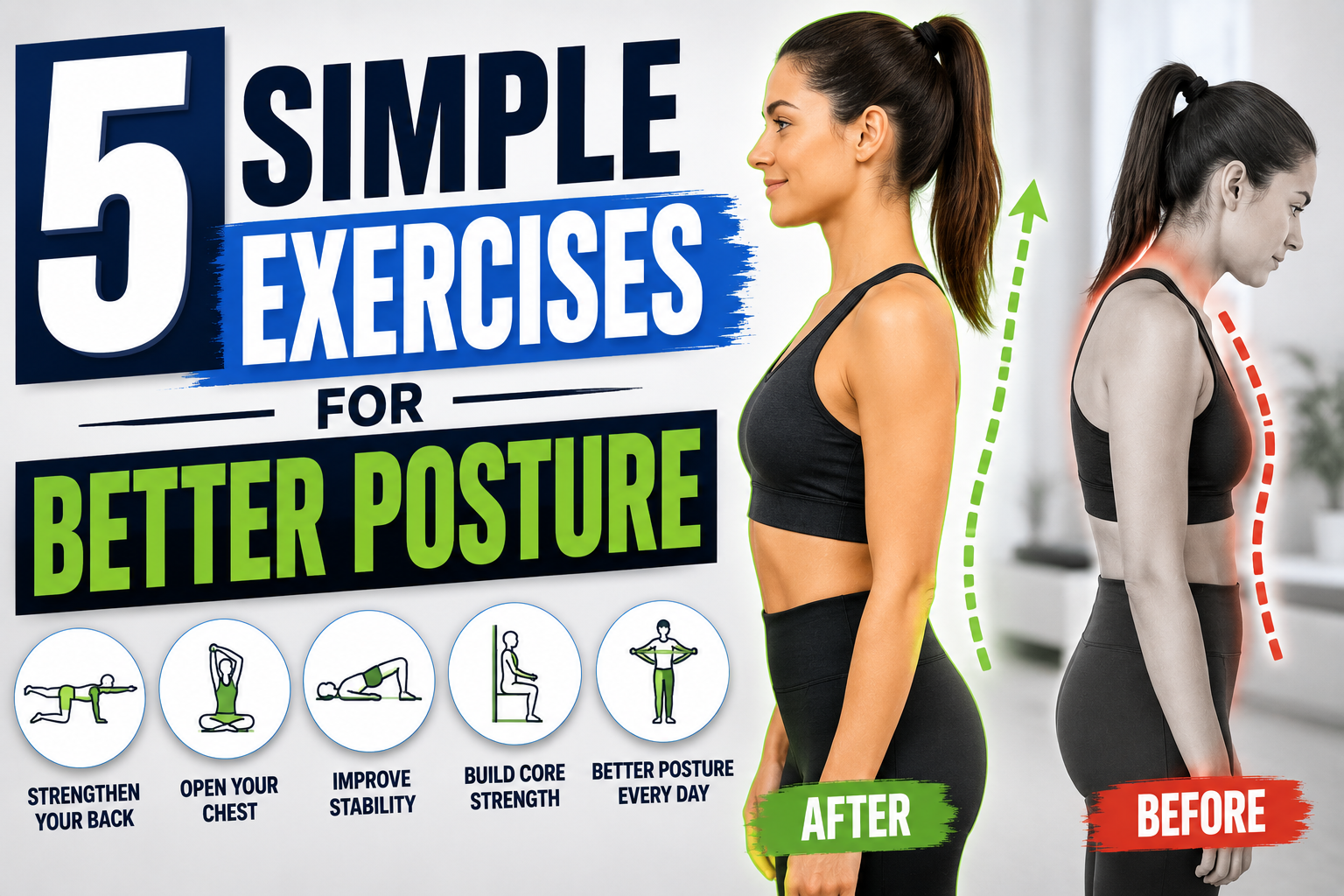
Why Good Posture Matters
Your posture is the way you hold your body when you stand, sit, or move. Good posture aligns your bones and joints. It keeps your muscles, ligaments, and tendons in good condition. This allows them to work properly.
Poor posture can result from many factors. These include prolonged sitting, weak muscles, or repetitive movements. It can lead to back pain, neck pain, and headaches. It can also affect your energy levels and mood.
Maintaining good posture is a key component of overall physical health. It supports the body's natural alignment and function.
1.Chin Tucks for Neck Alignment
This exercise targets the deep muscles in your neck. It helps to correct forward head posture. This is common with desk work and device use.
How to do it:
- Sit or stand tall.
- Gently draw your chin straight back. Imagine you are making a double chin.
- Keep your eyes level. Do not tilt your head up or down.
- Hold for 5 seconds.
- Relax and repeat 10-15 times.
This simple movement strengthens muscles that support your head. It can help reduce neck strain.
2.Scapular Squeezes for Upper Back Strength
Scapular squeezes strengthen the muscles between your shoulder blades. These muscles are often weak in people with rounded shoulders.
How to do it:
- Sit or stand with good posture. Let your arms hang naturally.
- Gently squeeze your shoulder blades together. Imagine you are trying to hold a pencil between them.
- Keep your shoulders relaxed down, not shrugged up towards your ears.
- Hold for 5 seconds.
- Release and repeat 10-15 times.
Regularly performing scapular squeezes can improve your upper back posture. It helps to pull your shoulders back into a more neutral position.
3.Wall Angels for Shoulder Mobility and Posture
Wall angels improve shoulder mobility and help you feel what good upper body alignment is like. They engage your back muscles and open up your chest.
How to do it:
- Stand with your back against a wall. Your feet should be a few inches away.
- Press your lower back, upper back, and head against the wall.
- Bend your elbows to 90 degrees and place the backs of your arms and hands against the wall.
- Slowly slide your arms up the wall, keeping contact. Go as high as you can without losing contact or arching your back.
- Slowly slide your arms back down.
- Repeat 10-15 times.
This exercise promotes better shoulder and thoracic spine mobility. It can help counteract the effects of slouching.

4.Pelvic Tilts for Lower Back Support
Pelvic tilts help strengthen your abdominal muscles and improve awareness of your pelvic position. This is crucial for supporting your lower back.
How to do it:
- Lie on your back with your knees bent and feet flat on the floor.
- Engage your abdominal muscles. Gently flatten your lower back against the floor by tilting your pelvis upwards.
- Hold for 5 seconds.
- Relax and return to a neutral position.
- Repeat 10-15 times.
This exercise can help alleviate lower back pain. It also builds a foundation for better overall posture.
5.Cat-Cow Stretch for Spinal Flexibility
The Cat-Cow stretch is a gentle yoga pose. It helps to improve the flexibility of your spine. It also warms up your back muscles.
How to do it:
- Start on your hands and knees. Your wrists should be under your shoulders and your knees under your hips.
- As you inhale, drop your belly towards the floor. Lift your chest and tailbone towards the ceiling (Cow pose).
- As you exhale, round your spine towards the ceiling. Tuck your chin to your chest and draw your navel in (Cat pose).
- Flow smoothly between these two poses for 5-10 breaths.
This movement increases spinal mobility. It can help relieve stiffness and improve posture over time. If you experience persistent pain or posture issues, consider seeking professional help from a physiotherapist. Our team at Physio2Health offers expert care in Richmond Hill physiotherapy.

Seek Professional Guidance
While these exercises are beneficial, they may not be suitable for everyone. Underlying issues can contribute to poor posture. These can include muscle imbalances or joint restrictions.
A thorough assessment can identify specific needs. Treatment may include:
- Manual therapy techniques
- Personalized exercise programs
- Education on ergonomics and lifestyle modifications
- Modalities such as massage therapy or osteopathy
Our experienced practitioners at Physio2Health are dedicated to helping you achieve optimal health. If you are looking for physiotherapy or a trusted physio near me, we are here to support you. Learn more about our approach to care on our about page.
Take the first step towards better posture and reduced pain.
Book Your Posture Assessment
Ready to address your posture concerns? Our expert team can help you develop a personalized plan.
Book your appointment today.
- Visit our booking page.
- Call us directly.
- Discuss your needs with our friendly staff.
We look forward to helping you move better and feel better.
Frequently Asked Questions
How long does it take to improve posture?
Consistency is key. You may start to feel a difference in a few weeks with regular practice of exercises and mindful posture awareness. Significant, lasting changes often take several months of dedicated effort and professional guidance.
Can poor posture cause headaches?
Yes, poor posture, especially forward head posture, can strain the muscles in your neck and upper back. This tension can lead to tension headaches. Correcting your posture can help alleviate this type of headache.
Is sitting with good posture important?
Absolutely. When sitting, maintain a neutral spine. Keep your feet flat on the floor, your back supported, and your shoulders relaxed. Avoid slouching or hunching over your workspace.
What if I have pain while doing these exercises?
If you experience pain, stop the exercise immediately. It is important to consult with a healthcare professional, such as a physiotherapist, to determine the cause of the pain and get appropriate advice. You can find expert care at Physio2Health in Richmond Hill.
Can physiotherapy help with posture?
Yes, physiotherapy is highly effective for improving posture. A physiotherapist can assess your specific posture issues, identify underlying causes, and provide a tailored exercise program and manual therapy to correct imbalances and improve alignment.
Improve Your Posture Today
Don't let poor posture affect your health and well-being. Take the first step towards a pain-free life.